Carry the trade-marketing operating rhythm into B2B: review what moved through the partner, make the demo a launch gate, keep one product truth, and brief the people who will have the conversation.
The most useful lessons I carried from consumer durables trade marketing into B2B industrial work are operational, not creative. Review what actually moved through the partner, not only what you shipped to them. Make demonstration readiness a launch gate. Keep product and offer facts identical everywhere a buyer or partner might look. Brief the people who will stand in front of the customer before you scale the media plan.
The habit that transfers is the operating rhythm, not the retail playbook
I spent four years at Beko in Egypt, most recently leading retail marketing and marketing communications. In that work, a campaign could look strong in the media report and still fail in the store: the model on the ticket did not match the advertisement, the demonstrator could not explain the benefit, or the unit was in the warehouse and not on the floor.
I already publish a figure of 200+ premium brand stores and shop-in-shops rolled out with retail partners. The habit I kept is the weekly discipline around execution: was the offer live where the customer would see it, and did anyone check?
Industrial buying is not retail shopping, and I have written about what must change when you market a project rather than a consumer product. Buying committees and specification cycles are different problems. What still transfers is the operating rhythm. In channel-led B2B, the "floor" is often a distributor counter, a system integrator's meeting room, a partner demo facility, or an exhibition stand. If that surface is not ready, the campaign has already lost its last mile. This is a qualitative lesson from moving between those two environments, not a claim that retail conversion rates apply to industrial pipeline, and not a result from one employer.
Measure sell-through thinking, even when the "shelf" is a project list
In consumer durables, sell-in and sell-through answer different questions. Trade marketing that only celebrates sell-in is at risk of a later surprise.
B2B teams fall into a close equivalent. We report badge scans, registered leads, or partner-transferred enquiries, and talk as if pipeline has been created. A useful review asks what happened after the transfer: was the enquiry qualified, did a project exist, and did it move to a technical discussion, a quotation, or a decision? Counting unique opportunities once, and talking about why they stalled, is the industrial version of looking at sell-out rather than warehouse shipments.
The same thinking applies to physical materials. Demo kits or display units that leave your warehouse and sit unused at a partner are sell-in without sell-through. I have seen launch stock celebrated in a shipment report and then found, weeks later, still in packaging. That is an observation from programmes I have worked on, not a named-partner audit. You need an agreed definition of "moved through" and a recurring review that includes the partner, not only an internal activity recap.
Treat the demo as part of the campaign
In appliances, the showroom is part of the media plan. If the advertised model is missing, or the person on the floor cannot demonstrate the benefit, the campaign message stops making sense.
In building technologies, the equivalent surfaces are easy to under-resource because they do not look like advertising. A partner demo room running old firmware, an exhibition unit that does not match the offer, or a lunch-and-learn with no working example will do the same damage.
I now treat demonstration readiness as a launch gate, not as something someone will "handle in the field." Before a campaign or a regional event goes live, someone should be able to answer:
- Which exact offer will be demonstrated, and does it match the current claim?
- Who is responsible for setup, and have they already run it once?
- What is the short explanation of the customer problem, the proof, and the limit of the claim?
- What happens if the unit, the network, or the venue fails?
If those answers are unclear, more traffic to the booth or the webinar will not help.
One product truth across every surface
Retail work makes you sensitive to model-number drift. The campaign shows one SKU, the retailer listing shows another, and the shopper reasonably concludes that the brand is careless.
B2B has the same failure with different labels. The website, the partner portal, the datasheet, the sales deck, and the email a partner just forwarded can describe the same system in slightly different ways. Names change and old PDFs survive. A consultant notices.
The remedy is unglamorous. Pick a source of truth for product names, current claims, and scope. Make sure the partner-facing kit and the public page agree. When something is retired, say so, and stop the old file from travelling. I go further into that kit discipline in Partner Enablement Content for Building Automation Channels. The consumer-durables version of the same idea is this: do not advertise a product the floor cannot honestly show.
Brief the people who will have the conversation
The best retail campaigns I worked on started with a short briefing around a few customer problems, the demonstration that supports the claim, and the objections that come up on the floor. If the person facing the shopper was unprepared, merchandising and media could not rescue the conversation.
Partner commercial teams and sales engineers deserve the same respect. Upload-only enablement is the industrial version of leaving a poster in the stockroom and hoping someone finds it. Schedule a short walkthrough: the customer problem, the fit and out-of-fit cases, the demonstration, and where to get help. Then ask what is still hard to explain. If experienced partners cannot tell the story after a briefing, the story is not ready for a campaign.
Not every consumer durables practice should be copied. Short promotional windows, blanket discount mechanics, and identical store packs rolled out across unlike markets travel badly into project-based selling. What I would copy is the refusal to treat partner-facing execution as someone else's problem after the campaign is "launched."
Frequently asked questions
What is sell-through thinking in a B2B channel?
It means judging success by what progressed after you transferred work to a partner, not only by what you shipped, registered, or handed over: qualified opportunities moving forward, demo assets actually in use, and clear reasons when they stall.
Which consumer durables habits transfer poorly to industrial projects?
Tactics built for short shopper decision cycles transfer poorly: heavy promotional flighting, one-week conversion windows, and identical execution packs used as if every market operated the same way. Industrial plans still need room for specification, technical review, and local service reality.
How do you brief partner teams without a retail floor?
Use the same structure on the surfaces they actually have: a demo room, a project meeting, or an exhibition stand. Walk through a short current story, run the demonstration once, and agree how questions will be escalated. A live 20- or 30-minute session is more useful than a long, unattended file share.
Do these lessons replace a demand generation plan?
No. They make a demand plan safer to scale. Media and events can create attention, but the partner-facing conversation is where that attention becomes a serious evaluation. Get the execution rhythm right, then put spend behind it.
Sources & data notes
Published on 23 November 2026. The 200+ retail-experiences figure from the author's time at Beko is already published on this website. The operating lessons presented here are qualitative practice from moving between consumer durables trade marketing and B2B industrial programmes, not a claim that retail conversion rates apply to industrial pipeline, and no confidential employer pipeline figures are disclosed.
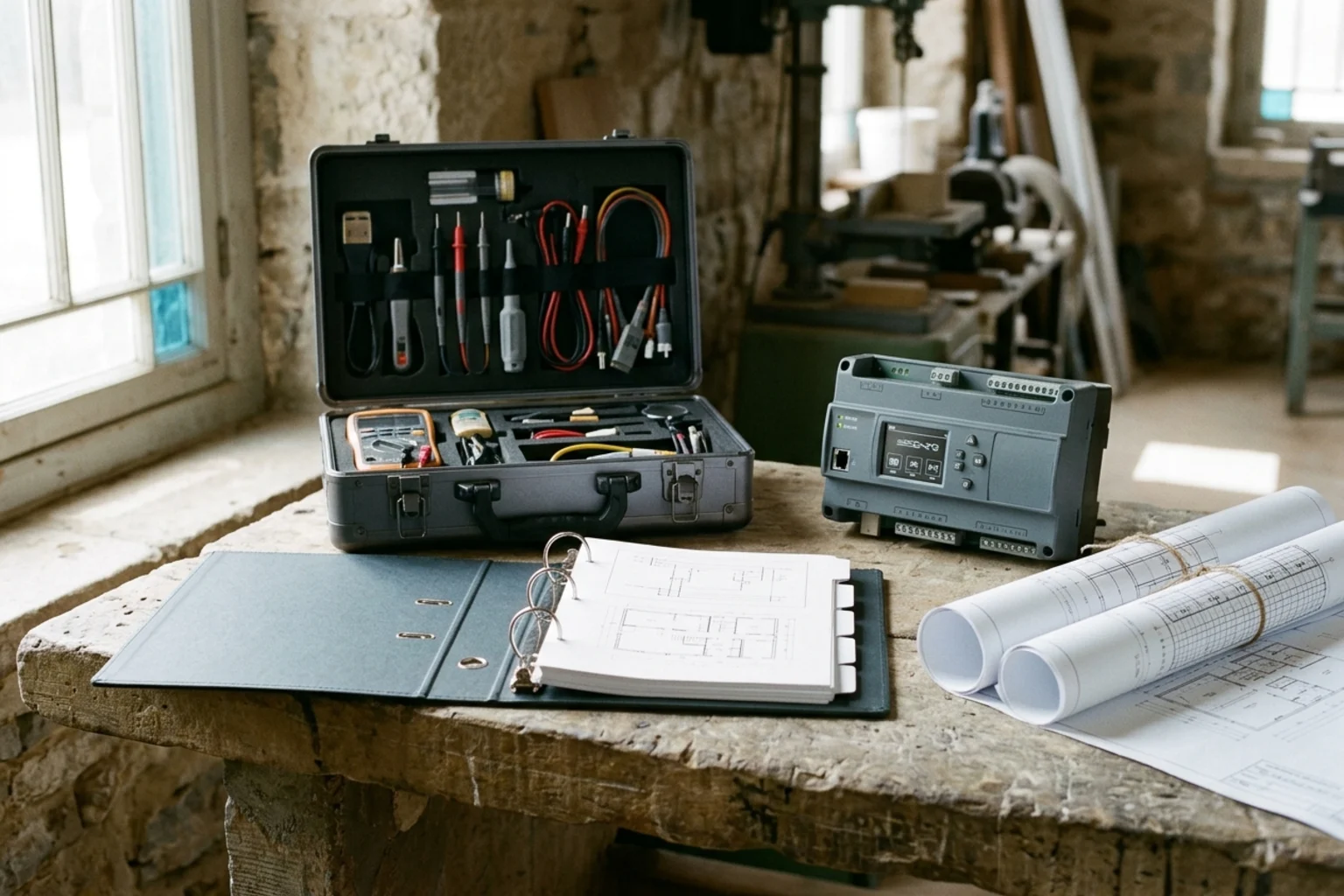
Banner: AI-generated conceptual illustration, not a photograph of a real store, factory, or named brand site.

About the perspective
Khaled Nasr MBA is a Cairo-based Regional Customer Marketing Manager at Honeywell Building Automation for the Middle East, Africa, and Turkey (META). Alongside 10+ years in regional B2B, channel, and brand marketing, he previously led retail marketing and marketing communications at Beko Global in Egypt and began his career as a civil engineer and project manager.
These articles are personal industry analysis. Views are my own and do not represent an employer’s position or endorsement, and they do not disclose customer project information.
Explore Khaled’s experience ↗