Design the event around the conversation that should happen next, then track whether that conversation moves the account forward.
An industrial exhibition can create access that is difficult to achieve through a general campaign. It brings customers, partners and technical specialists into the same setting. But attendance is not the same as commercial progress. A crowded stand may contain few relevant buying accounts, while a small, well-prepared meeting can resolve a real project obstacle.
The event plan should therefore begin with the accounts and decisions that matter, not with the stand dimensions or the number of badges the team hopes to scan.
Understand the industry context without borrowing its growth
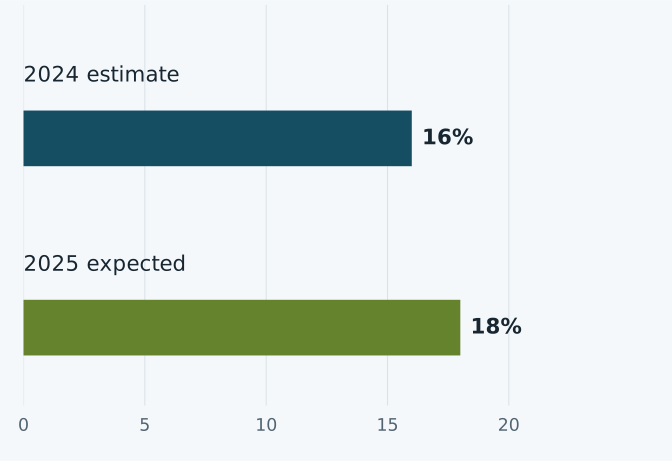
UFI’s February 2025 outlook estimated average year-on-year exhibition-business revenue growth of 16% for 2024 and an expected 18% for 2025. [1] These historical outlook figures describe the exhibition industry’s business conditions. They do not demonstrate that an exhibitor’s investment will produce a positive return.
An expanding exhibition backdrop
Average year-on-year revenue growth in UFI’s February 2025 outlook
View chart data
| Measure | Value |
|---|---|
| 2024 estimate | 16% |
| 2025 expected | 18% |
Measurement deserves particular attention. Nielsen’s 2024 global marketer survey found that only 38% measured traditional and digital efforts together when evaluating holistic ROI. [2] An event that sits outside the customer record can contribute to that fragmentation, especially when an account also interacts with sales, partners and digital content.
Choose a job for each account interaction
Before the event, ask the account team what a useful meeting would accomplish. An early-stage prospect may need to understand the application. An active opportunity may need a technical specialist. A partner may need agreement on a joint customer plan. These conversations need different preparation and should not share an identical success definition.
Build invitations around that purpose. A relevant problem and a named expert can be more persuasive than a general invitation to visit the booth. Keep scheduling simple and leave enough flexibility for customers whose project questions cannot be resolved in a short product pitch.
Design the stand for useful evidence
Choose demonstrations that explain a customer problem clearly. If the application involves a complex system, make the boundaries and assumptions visible. Give the team a route to supporting material and a way to record questions that require follow-up.
Prepare staff to distinguish curiosity from a potential buying need without dismissing either. A visitor can be valuable for education or a future relationship without being a sales opportunity today. Recording that distinction makes later reporting more honest and follow-up more relevant.
Capture context with consent
A contact record should preserve the account, the problem discussed, the agreed next step and its owner. A badge scan alone cannot tell the next colleague why the person visited. Follow the event’s and organization’s approved consent process before adding contacts to further communications.
After the event, send the material actually requested and make the handoff visible. If the next step was a technical discussion, a generic newsletter does not complete it. Review unanswered questions and missed commitments alongside the activity totals.
Report progress without double-counting
Separate new opportunities from existing opportunities that the event helped advance. Count the same project once and keep the event’s contribution visible without claiming exclusive credit. Include the event’s full relevant costs when assessing commercial return, and allow for the actual project buying cycle.
An event review should explain what changed: which accounts progressed, which objections became clearer and which conversations did not justify further investment. That gives the next event a stronger brief. The goal is not simply a busier stand; it is a more productive set of customer decisions.
Sources & data notes
Sources checked on 12 September 2026. Observation periods and forecast dates are stated alongside the figures. Recommendations are analysis, not measured outcomes from these studies.
- UFI — Global Barometer outlook (10 February 2025) ↗
Respondent-reported/expected year-on-year exhibition business revenue growth. These are February 2025 outlook figures, not audited 2025 outcomes.
- Nielsen — 2024 Annual Marketing Report release (25 April 2024) ↗
Global marketer survey; confidence and cross-channel measurement are different questions, not directly opposite categories.
Banner: AI-generated conceptual illustration, not a photograph of a named project. Chart: created from the cited data; any rounding or derived index is identified above.

About the perspective
Brand events, community experiences and regional partner programmes inform this approach to connecting event design with follow-through.
These articles are personal industry analysis and do not represent an employer’s position or disclose customer project information.
Explore Khaled’s experience ↗