
Make the promise consistent from the first social impression to product comparison, delivery and after-sales support.
A strong appliance advertisement can win attention and still lose the sale. The shopper may find a different model number at the retailer, unclear delivery terms or a demonstration that never explains the benefit shown in the campaign. For consumer durables, the challenge is to connect discovery with the confidence required for a considered purchase.
That connection is an operational task as much as a communications task. The shopper experiences the brand through the retailer, the product information and the delivery promise—not only through the creative.
Put social discovery in the right context
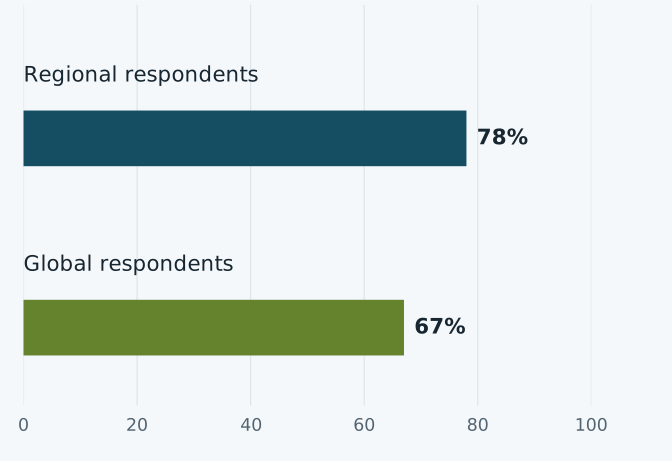
PwC’s 2024 regional research found that 78% of respondents discovered new brands through social media, compared with 67% globally. [1] Its regional study covered more than 2,100 consumers across Saudi Arabia, the UAE, Qatar and Egypt. [2] These findings are neither appliance-specific nor a measurement of incremental sales from advertising. They identify a relevant discovery channel without proving which campaign will convert.
Social discovery is a meaningful touchpoint
Consumers reporting new-brand discovery via social media · 2024
View chart data
| Measure | Value |
|---|---|
| Regional respondents | 78% |
| Global respondents | 67% |
The marketing implication is to connect the social message to a useful next step. If the advertisement promises easier everyday use, the landing page and retail demonstration should show how that benefit works for the models available in the market.
Build the journey around purchase questions
For a consumer durable, organize information around fit, use and ownership. Does the product fit the home? Is its capacity appropriate? Which features matter in normal use? What will delivery, installation and service involve? Answering those questions can be more helpful than adding another layer of promotional language.
Keep model identifiers consistent across campaign assets, product pages and retailer listings. Where specifications or energy labels differ between models, show the difference plainly. Do not use one premium model’s capabilities to advertise an entire range without qualification.
Make the showroom part of the campaign
Give retail teams a demonstration guide built around a few customer problems rather than a script listing every feature. Include common objections, accurate comparison points and the limits of any claim. Check that the displayed product and price match the active promotion.
A campaign review should include store-level execution: availability, display condition, current point-of-sale material and staff understanding. If a product is missing from the shelf or the advertised model is unavailable, report that alongside media performance. Otherwise marketing may optimize creative when the real barrier is execution.
Measure sell-through, not only shipments
Shipments into a retailer and purchases by end customers answer different questions. Use retailer sell-through data where available, and document the gaps where it is not. A successful shipment push can leave excess stock if consumer demand does not follow.
To evaluate advertising causally, an appropriate controlled test can compare exposed and unexposed groups; Google’s Conversion Lift documentation explains that distinction. [3] Such tools have eligibility and data requirements. Where a suitable experiment is not feasible, describe observed sales associations honestly instead of presenting attribution as proof of causation.
Protect the ownership experience
Before launch, confirm the service and delivery statements with the responsible teams. A clear after-sales route can support confidence, but an unverified promise creates a problem that a later campaign cannot easily repair.
The practical goal is consistency. The shopper should recognize the same product, benefit and terms at every step. That is how consumer-durable marketing turns an attractive first impression into a purchase the customer can make with confidence—and a brand experience that the retailer can stand behind.
Sources & data notes
Sources checked on 12 September 2026. Observation periods and forecast dates are stated alongside the figures. Recommendations are analysis, not measured outcomes from these studies.
- PwC — Voice of the empowered consumer (2024) ↗
Self-reported consumer discovery and purchase influence; not a causal campaign-lift study or an appliance-only survey.
- PwC — Voice of the Consumer 2024: Regional findings ↗
Regional research covered more than 2,100 respondents in Saudi Arabia, UAE, Qatar and Egypt; findings do not cover every MEA market.
- Google Ads Help — About Conversion Lift ↗
Controlled-experiment methodology. Product availability and eligibility vary; accessed 12 September 2026.
Banner: AI-generated conceptual illustration, not a photograph of a named project. Chart: created from the cited data; any rounding or derived index is identified above.

About the perspective
Consumer electronics, branded retail environments and marketing communications experience inform the focus on execution across the shopper journey.
These articles are personal industry analysis and do not represent an employer’s position or disclose customer project information.
Explore Khaled’s experience ↗